
John Leon
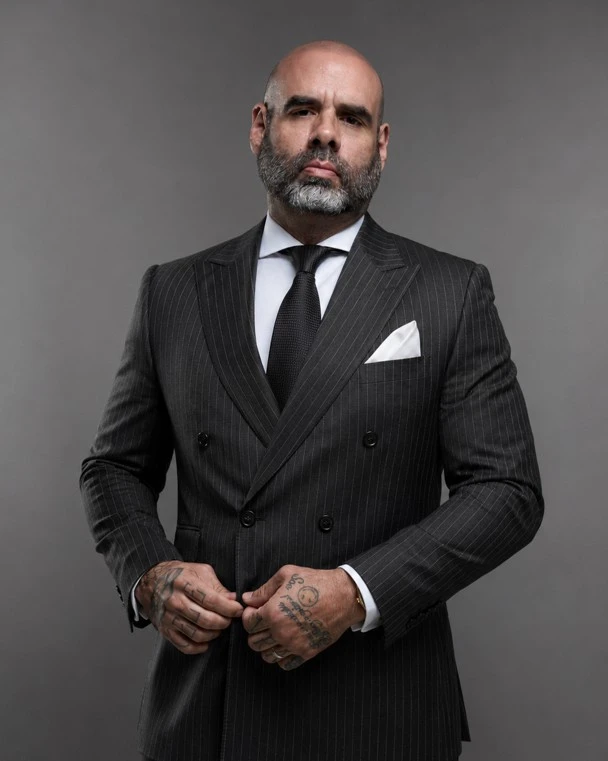
Co Founder, Leon Foundation
John Leon: Redefining Crisis Leadership Through Vision, Responsibility, and Global Impact
Co-Founder and President, Leon Foundation
John Leon has built a career around understanding how people, businesses, and institutions respond when faced with difficult decisions and unexpected challenges. A nationally recognized attorney, entrepreneur, author, and philanthropist, his professional journey has extended from high-stakes litigation and corporate advisory work to crisis management, leadership development, and international charitable initiatives. Across these different areas, one principle has remained central to his approach: effective leadership begins long before a problem demands attention.
With nearly 25 years of experience in law and business, Leon has developed a perspective that looks beyond immediate problems to understand their wider consequences. His work has involved helping organizations and individuals navigate legal disputes, financial uncertainty, operational difficulties, and reputational risks. However, his ambitions reach beyond resolving challenges. Through his work in crisis leadership and his philanthropic responsibilities as Co-Founder and President of the Leon Foundation, he is focused on building stronger institutions, preparing leaders for uncertainty, and creating opportunities for communities that need support.
His philosophy is captured in a principle that guides much of his work: “The best crisis managers are those who begin managing crises long before a crisis ever occurs.” This belief has shaped his professional practice, inspired his crisis management framework, and influenced the way he approaches leadership and social responsibility.
Leadership Built on Preparation and Accountability
Leon’s leadership philosophy is rooted in preparation, sound judgment, and personal responsibility. His experience in litigation has shown him that decisions made under pressure can affect far more than the immediate situation. A legal dispute may influence an organization’s financial position, employee confidence, public reputation, and long-term direction. Similarly, a failure in leadership can create problems that extend across entire institutions.
These experiences have shaped his belief that leaders must understand the full impact of their decisions. Rather than reacting only when difficulties arise, they should identify potential risks, assess their options, and establish clear plans before circumstances become critical.
This approach is reflected in his professional journey. After founding The Law Offices of John Leon in 2003, he developed a multidisciplinary legal practice covering corporate law, healthcare litigation, personal injury, commercial disputes, and other complex legal matters. His experience across different areas of law has given him a broad understanding of how legal, financial, operational, and human concerns often overlap.
Leon also places importance on understanding people and maintaining trust during difficult situations. Effective leadership, in his view, requires more than authority or technical knowledge. It calls for the ability to communicate clearly, remain composed, and make responsible choices when information is incomplete and the consequences are significant.
Turning Crisis Management Into a Leadership Strategy
One of Leon’s most important contributions is his focus on Pre-Emptive Crisis Management. Traditional crisis response often begins after an organization has already encountered a serious problem. Leon’s approach places greater emphasis on recognizing vulnerabilities early and taking steps to prevent them from developing into major threats.
He has translated this philosophy into the Leon Crisis Leadership Model and its P.R.E.P.A.R.E. Framework™, which includes seven stages: Predict, Recognize, Evaluate, Plan, Act, Recover, and Evaluate Again. Together, these stages offer a structured approach to identifying risks, understanding their potential consequences, preparing responses, taking action, and learning from the results.
The framework reflects his belief that crisis management should be an ongoing leadership responsibility rather than an activity reserved for emergencies. Organizations that regularly assess their weaknesses and prepare for different possibilities are better positioned to protect their people, resources, and long-term interests.
Leon has also taken this message beyond corporate environments. His TEDx presentation, Life Lessons From a Crisis Manager, explored the idea that everyone encounters situations requiring crisis management skills. Whether making a professional decision, dealing with an unexpected setback, or managing a personal challenge, individuals must often assess circumstances, consider consequences, and act without having every answer.
His work has attracted attention from business and legal publications, including Bloomberg Law, Forbes, USA Today, and CIO Bulletin. Through these platforms, he has shared his views on organizational preparedness, strategic intervention, and the importance of preventing recurring problems.
From Legal Experience to a Broader Theory of Leadership
Leon’s interest in crisis management has also led him toward a significant intellectual undertaking. His forthcoming treatise, CRISIS LEADERSHIP: The Science of Leadership Under Consequential Uncertainty: Principles, Theory, and Practice, seeks to examine leadership under conditions where decisions carry serious consequences and certainty is limited.
At the center of this work is his proposed General Crisis Leadership Theory (GCLT). The theory explores how leadership decisions are shaped by uncertainty, time pressure, available information, institutional resources, trust, and the possible outcomes of different actions.
Drawing on areas such as law, organizational psychology, decision science, behavioral economics, systems theory, ethics, and risk management, Leon aims to develop a broader understanding of why some organizations manage difficult situations effectively while others struggle.
The proposed theory also reflects his interest in connecting practical experience with academic research. While the P.R.E.P.A.R.E. Framework™ offers a practical method for crisis preparation and response, GCLT seeks to provide a wider foundation for studying leadership under pressure. Its potential applications include corporate governance, healthcare, public policy, national security, artificial intelligence, and institutional resilience.
This work represents an important development in Leon’s career. Having spent years advising and representing clients through difficult situations, he is now working to turn those experiences into ideas that can be studied, examined, and applied by future leaders.
Challenges, Milestones, and an Entrepreneurial Outlook
Building a successful legal practice requires the ability to manage demanding cases, changing regulations, competing interests, and high expectations. Leon’s early experience included participating in approximately 15 jury trials within an eight-month period, giving him an intensive introduction to courtroom advocacy and the demands of consequential decision-making.
Over the years, his practice has handled and advised on thousands of legal matters involving individuals, businesses, major corporate interests, and Fortune 500 companies. His professional journey has also brought recognition from organizations and publications, including Super Lawyers, South Florida Legal Guide, and the Cystic Fibrosis Foundation’s 40 Under 40 Most Outstanding Lawyers in Miami. Other distinctions include the Albert Nelson Marquis Lifetime Achievement Award and CIO Today’s Top Trial Attorney of the Year 2025. In 2026, Visionary Titans recognized him as The Most Trusted Crisis Management Lawyer to Watch.
Beyond law, Leon has developed interests across real estate, publishing, hospitality, media, fashion, agriculture, and healthcare. His entrepreneurial activities reflect his willingness to explore different industries while applying the same principles of preparation, calculated risk, and adaptability.
His personal pursuits also demonstrate his commitment to discipline. An endurance athlete, Leon has taken part in Ironman triathlons, demanding mountain climbs, international off-road racing, and a solo swim from Alcatraz. Sports Illustrated profiled his athletic achievements in 2025, highlighting the relationship between physical endurance and the qualities required to manage difficult professional challenges.
These experiences reinforce an important part of his leadership philosophy: preparation creates confidence, but the ability to adapt determines how effectively a person responds when circumstances change.
The Leon Foundation: Extending Leadership Beyond Business
For Leon, professional achievement is only one measure of meaningful influence. His work with the Leon Foundation reflects a wider commitment to using resources, experience, and leadership to improve lives.
Alongside his wife, Angelina, he serves as Co-President of the Foundation, which supports initiatives in education, poverty and hunger relief, social justice, human rights, animal welfare, and arts and culture. Its work extends across international communities, with a particular focus on people facing limited access to education, healthcare, clean water, and basic resources.
Among its initiatives are efforts to build primary schools in Africa and Central America, including projects in Senegal and Honduras. The Foundation also supports access to clean water, humanitarian healthcare, educational opportunities, and assistance for vulnerable populations.
These initiatives reflect a belief that lasting progress requires more than short-term assistance. Education can create opportunities for future generations, access to clean water can improve community health, and support for vulnerable populations can help restore stability and dignity.
Leon’s involvement with civic, educational, and cultural organizations, including the Miami Symphony Orchestra, Miami City Ballet, and the Frost Art Museum, further reflects his interest in supporting institutions that contribute to society.
His philanthropic work follows a principle that also informs his professional life: identifying areas of need, bringing people and resources together, and creating solutions that can deliver lasting results.
A Vision for the Future of Leadership and Social Impact
Looking ahead, Leon’s work points toward a broader role for crisis leadership in a world facing rapid technological change, economic uncertainty, institutional challenges, and growing public expectations. Businesses and public institutions must increasingly make important decisions while dealing with incomplete information and risks that can develop quickly.
He sees preparation, responsible decision-making, and institutional learning as essential capabilities for leaders across industries. His continued work on the P.R.E.P.A.R.E. Framework™ and General Crisis Leadership Theory reflects his ambition to make crisis leadership a more widely understood and applied discipline.
At the same time, the Leon Foundation represents a different but closely connected part of that vision. While his professional work focuses on helping people and organizations navigate uncertainty, his philanthropic efforts aim to address some of the challenges that affect communities directly.
John Leon’s journey brings together law, entrepreneurship, crisis management, intellectual work, and philanthropy. Each area reflects a different expression of his belief in preparation, responsibility, and meaningful action.
His legacy will not be defined only by the cases he has handled, the professional recognition he has received, or the ventures he has pursued. It will also depend on the leadership principles he helps advance, the institutions he supports, and the opportunities created through the Leon Foundation. For Leon, influence carries a responsibility to make a lasting difference, particularly when the decisions involved have consequences far beyond the individual making them.